Research Summaries passages make up 45-60% of the ACT Science Test, the largest share of any passage type. Each one describes one or more related experiments, then asks you to identify the independent variable, the dependent variable, and the controls, and to compare results across setups. You will also see questions asking what would happen if the researchers changed one part of the design. No outside science knowledge is required. Every answer comes from the text, the procedure description, and the data tables in front of you. Calculators are not permitted on the Science Test. Build your skill on two fronts: reading a single experiment's design closely, and comparing two or more experiments side by side.
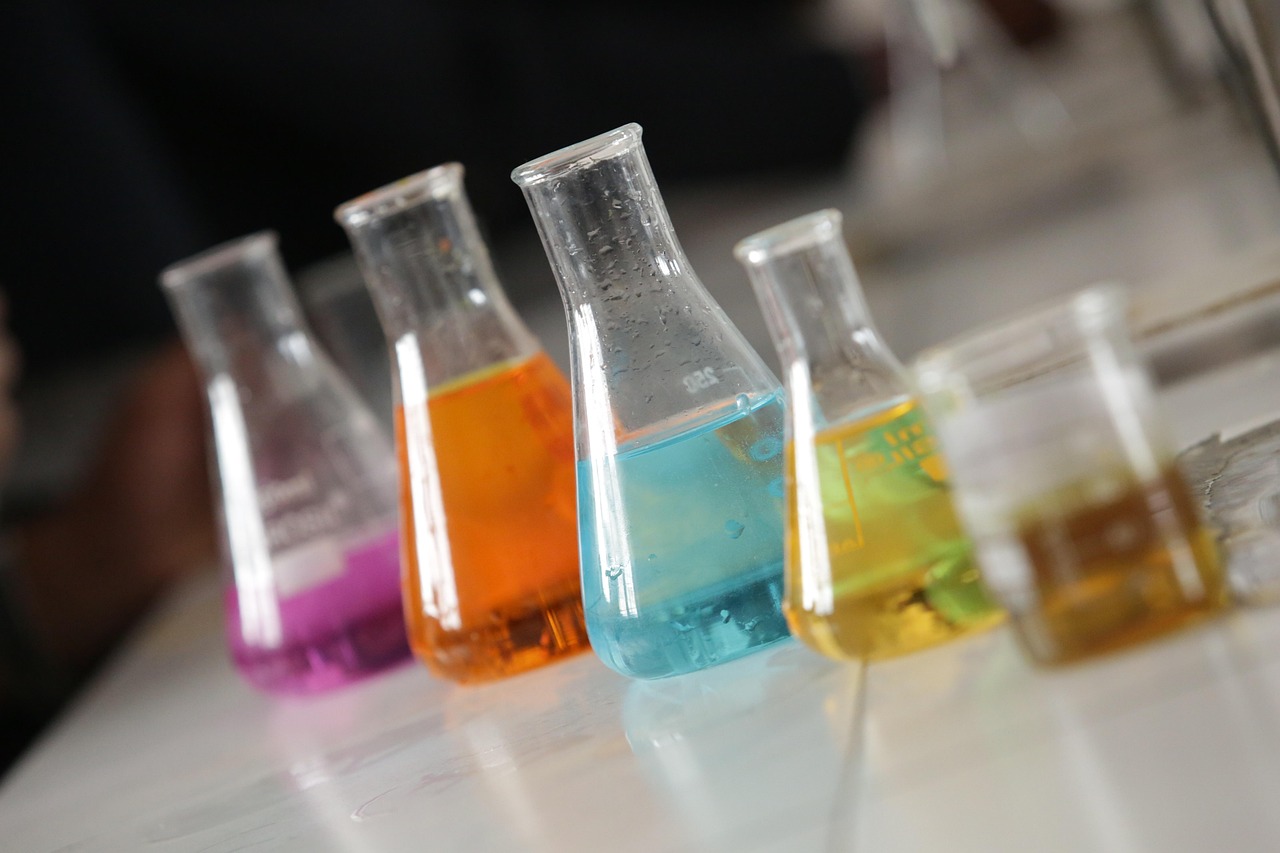
Research Summaries passages describe one or more related experiments and ask you to work through how each one was built and what its results mean. This passage type carries the biggest weight on the ACT Science Test, at 45-60% of Science questions. Every answer sits in the passage text, the procedure description, or the data printed alongside it. Getting comfortable with variables and experimental design pays off across the whole section.
This guide breaks down what a Research Summaries passage looks like, the exact skills the questions test, and how to compare results across multiple experiment setups. You will get a step list for passages holding two or more experiments, a way to answer questions about why a procedure step exists, plus a method for predicting the outcome of a design change. Original worked examples show how the variable structure appears on the page. It closes with links to two free drills isolating these skills, letting you build them one at a time.
What Research Summaries Passages Cover
ACT defines Research Summaries as "descriptions and results of one or more related experiments," with questions focused on experimental design and interpreting the results. A passage might present a single experiment run under several conditions, or two to three separate but related experiments building on each other. Each experiment arrives with a short procedure description and one or more data tables or graphs. Read the setup as closely as you read the numbers, because most questions turn on how the experiment was built rather than on the raw values.
The table below shows where Research Summaries sits among the three Science passage types, per ACT's Description of Science Test.
| Passage Type | Share of Questions | Focus |
|---|---|---|
| Data Representation | 25-35% | Reading graphs, tables, and diagrams |
| Research Summaries | 45-60% | Experimental design and interpreting results |
| Conflicting Viewpoints | 15-20% | Comparing explanations for the same phenomenon |
Research Summaries questions feed all three official reporting categories on your score report. Scientific Investigation is the category ACT builds around experimental tools, procedures, and design, so it lines up most directly with this passage type, while Interpretation of Data and Evaluation of Models, Inferences, and Experimental Results cover the results side. The shares below run section-wide, per the same ACT description page.
| Reporting Category | Share of Questions |
|---|---|
| Interpretation of Data | 38-50% |
| Scientific Investigation | 18-32% |
| Evaluation of Models, Inferences, and Experimental Results | 24-38% |
Section Format and Rules
The full Science Test runs 40 questions in 40 minutes under the current enhanced ACT format, up from 35 minutes on the legacy test, per ACT's enhancements page. Science is optional on the Enhanced ACT and does not affect your Composite score, the same treatment Writing gets. Science was a required section on the retired legacy format.
- Calculators are not permitted anywhere on the Science Test.
- Each question offers 4 answer choices, labeled A, B, C, D on odd-numbered questions and F, G, H, J on even-numbered questions, matching the format used on English, Math, and Reading. The letter I is skipped in the even-numbered set. This alternation is the paper-form convention printed in ACT's official practice test form, so read the letters as labels only and mark whichever set your form shows.
- A current official practice form shows 3 Research Summaries passages out of 7 total passages, with 5 to 6 questions per passage, though ACT does not publish this as a fixed spec, so treat it as a typical pattern rather than a guarantee for every form.
Identifying Independent, Dependent, and Control Variables
Every experiment in a Research Summaries passage has three parts you need to locate before you touch the questions. Find these first, and most design questions become quick lookups instead of re-reads. Label them on the page as you read the procedure, one note per part. The scan costs far less time than re-reading the procedure once per question.
- Independent variable: the factor the researchers deliberately change between trials or groups, such as temperature, concentration, or time.
- Dependent variable: the outcome the researchers measure in response, such as reaction rate, growth, or yield.
- Control variables: everything the researchers hold constant across trials so the comparison stays fair, such as sample size, starting materials, or equipment.
Questions phrase this skill in a few ways: naming which variable changed between two trials, naming what stayed the same, or asking why a particular factor was held constant. All three point back to the same three-part structure in the passage. A question about why a factor was held constant is asking you to name the comparison the researchers wanted to keep fair. Answer it by stating which variable the design isolates once everything else stays fixed.
A Worked Example
Say a passage describes three trials testing how water temperature affects the time it takes salt to fully dissolve. Trial 1 uses water at 10°C, Trial 2 at 25°C, and Trial 3 at 40°C. Each trial uses the same 5 grams of salt in 100 mL of water, stirred at the same rate. Here, temperature is the independent variable, dissolving time is the dependent variable, and salt amount, water volume, and stirring rate are controls. A question asking "which variable did the researchers hold constant across all three trials" is testing whether you name any one of those controls.
Comparing Multiple Experiment Setups
Many Research Summaries passages present two or more experiments sharing a topic but changing the design. Comparison questions ask you to notice what differs between the experiments themselves, beyond differences between trials inside one experiment. The second experiment often reuses the first setup with one deliberate edit. Spot the edit and you have the key to most comparison questions on the passage.
Work through these steps when a passage has more than one experiment.
- Read each experiment's setup separately first, noting its own independent, dependent, and control variables.
- List what changed between Experiment 1 and Experiment 2: a new variable added, a control variable turned into an independent variable, or a different measurement method.
- Check whether the experiments used the same starting conditions, so you know if their results are directly comparable.
- Look at whether Experiment 2 was designed to test a question Experiment 1 was not able to answer alone.
A common question type asks why a second experiment was necessary given the first. The answer usually traces to a control variable in Experiment 1 turned into the tested variable in Experiment 2, closing a gap the first design left open.
Understanding Experimental Methodology Questions
Methodology questions ask why the researchers did something, not what the results were. They point at one piece of the procedure: a control group, a set of repeated trials, or a single preparation step. Each piece exists to remove an alternative explanation for the outcome. Name the explanation it removes and the correct choice follows.
Three procedure features come up again and again. Learn what each one is there to rule out.
- A control group gets no treatment, or a neutral version of it, so the researchers have a baseline. Without a baseline, a change in the treated group has nothing to be measured against, and the treatment stays impossible to separate from the normal behavior of the system.
- Repeated trials at the same setting test whether a result holds up. One measurement leaves random error and one-off equipment faults invisible. Repeats agreeing with each other show the effect is real, and repeats scattering widely warn you the measurement is unreliable.
- A specific preparation or cleanup step, such as rinsing equipment between runs or holding every sample at one temperature before testing, blocks a second possible cause of the results. Ask what would muddy the comparison if the step were skipped.
A Methodology Worked Example
Say an experiment tests whether a fertilizer increases seedling height. Group A gets fertilizer mixed into its water, Group B gets plain water, and each group holds 20 seedlings under identical light and soil. Group B is the control group. It shows how tall the seedlings grow with no fertilizer, so any height gap between the groups traces back to the fertilizer instead of to ordinary growth. The 20 seedlings per group supply the repetition: one tall seedling proves nothing, while a consistent gap across 20 pairs does.
Now say the procedure adds a step where every pot is weighed and topped up to the same soil mass before planting. A question asking why the step was included is asking what it rules out. Uneven soil mass would hand some seedlings more nutrients and water, giving a second possible cause for any height difference. The step removes the second cause, leaving fertilizer as the only factor changing between the groups. Answer these questions by naming the alternative explanation the design shuts down, and skip choices praising the step in general terms without saying what it controls.
Predicting Results of Design Changes
Some questions describe a hypothetical change to the experiment and ask you to predict the outcome. The change might be a new trial with a different value for the independent variable, an added control group, or a longer measurement window. These questions look like outside-knowledge questions, but the evidence is always in the data already given. Treat them as trend-reading tasks.
Answer these by extending the pattern already shown in the data, not by applying outside science knowledge.
- Find the trend in the existing results: note whether the dependent variable rises, falls, or levels off as the independent variable changes.
- Locate where the hypothetical new value would fall relative to the existing trials.
- If the new value sits inside the tested range, interpolate along the same trend. If it sits outside the range, extend the trend cautiously and check whether the passage text mentions a limit or plateau.
- Rule out choices contradicting the direction of the trend shown in the data.
Practice Research Summaries Skills
Build these two skills separately, then combine them. Our Experimental Design & Variables drill isolates identifying independent, dependent, and control variables in a single experiment. Our Comparing Experiments drill focuses on reading multiple related setups side by side and predicting design-change outcomes. Both are free, untimed, and require no signup.
Once both skills feel solid, pair them with the other two passage types on our ACT Science section guide. Our Conflicting Viewpoints guide shows you how the third passage type works. From there, move to a full-length, timed Science section on our free ACT practice tests. Timing is the second half of the problem. Run the drills untimed first, then rehearse the whole section under the clock.
Sources
Free practice
Put this into practice with free ACT mock tests and topic drills

Written by
Muntasir Minhaz
Runs 10Exam. Still loses to the SAT timer now and then, strictly for research.
All articles by Muntasir Minhaz →Related Articles
ACT Scores for Scholarships
There is no single ACT score for scholarships: each college and state program sets its own cutoff on the 1-36 Composite scale, so...
Aug 07, 2026
ACT Guide for International Students
International students register for the ACT through a free MyACT account, and non-US test dates cover all countries outside the Un...
Aug 07, 2026
ACT Science Conflicting Viewpoints and Evaluating Models
The ACT Science Conflicting Viewpoints passage presents two or more explanations for one phenomenon. These explanations disagree b...
Aug 07, 2026
ACT Science Data Representation: Graphs and Trends
Data Representation questions on ACT Science hand you a table, graph, or figure and ask you to read it or reason one step beyond i...
Aug 06, 2026
ACT Reading Vocabulary in Context Questions
ACT Reading vocabulary-in-context questions ask you to name what a word or phrase means inside one specific sentence, not what it...
Aug 06, 2026
ACT Reading Main Idea, Craft and Comparative Passages
ACT Reading tests three related skills covered in this guide: finding the main idea, explaining an author’s structural or wo...
Aug 05, 2026