GRE Verbal Reasoning is 27 questions across two separately timed sections, for a total of 41 minutes. Section 1 holds 12 questions in 18 minutes. Section 2 holds 15 questions in 23 minutes, and its difficulty depends on how you perform in Section 1. Three question types fill these sections: Reading Comprehension covers about half the questions, and Text Completion plus Sentence Equivalence split the other half. Reading Comprehension passages range from a single paragraph to several, with 1 to 6 questions attached to each passage. The section score scale runs from 130 to 170.
| Section | Questions | Time |
|---|---|---|
| Section 1 | 12 | 18 minutes |
| Section 2 | 15 | 23 minutes |
| Total | 27 | 41 minutes |
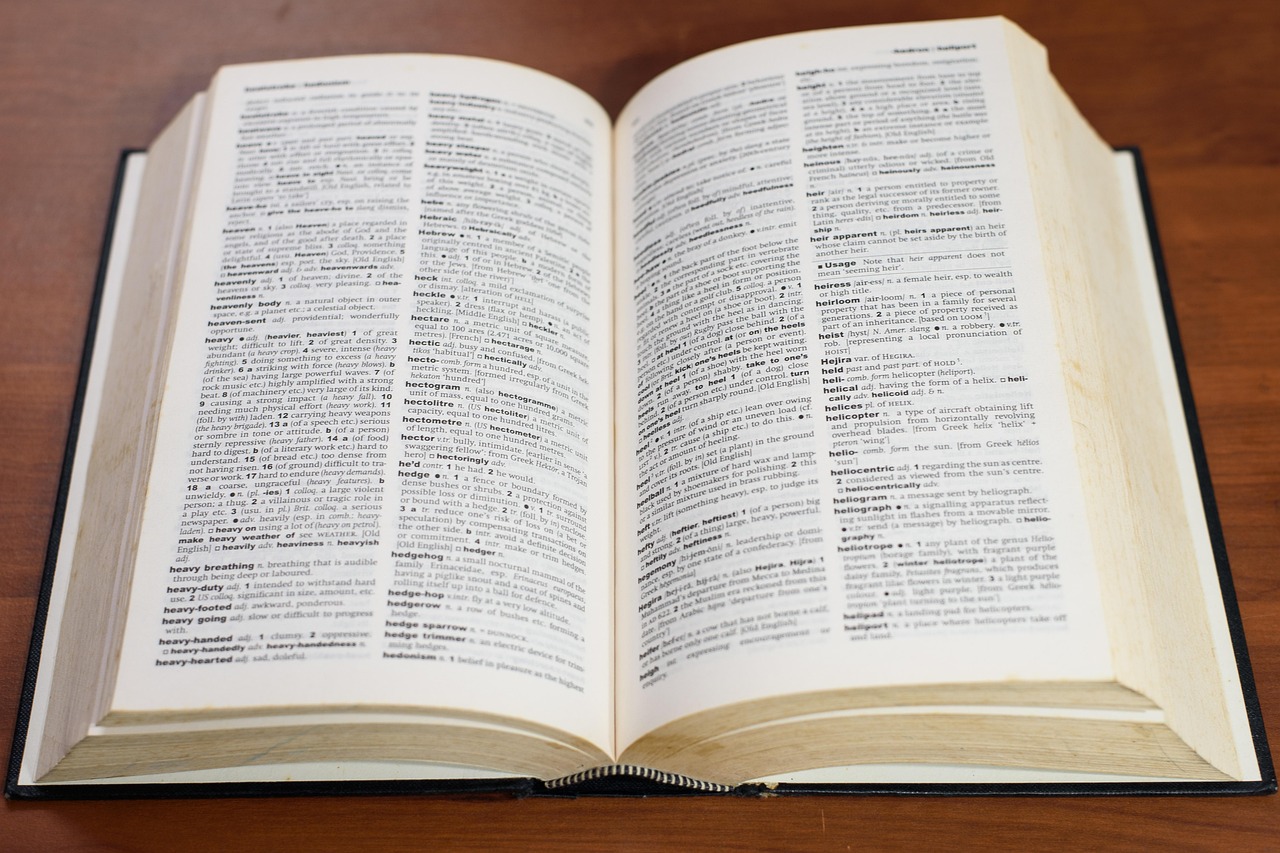
GRE Verbal Reasoning is two sections, 27 questions and 41 minutes in total. The first section holds 12 questions and runs 18 minutes. The second holds 15 questions and runs 23 minutes, and its difficulty is set by your overall performance on the first. Three question types fill both sections: Reading Comprehension, Text Completion and Sentence Equivalence.
This guide breaks down the section structure and timing, the three question types and their formats, reading passage lengths, and a vocabulary-in-context strategy for approaching blanks and passages. It ends with links to drill sets sorted by question type and reading skill.
Section Structure and Timing
The shortened GRE General Test has been in effect since September 22, 2023, and runs about 1 hour 58 minutes across five sections. Analytical Writing, one Analyze an Issue task at 30 minutes, always comes first. Verbal and Quantitative Reasoning follow in an order set for each test taker. Verbal Reasoning takes 41 of the total minutes, delivered as two separately timed sections.
Here is the published split, with an average pace worked out from it:
| Section | Questions | Time | Average pace |
|---|---|---|---|
| Section 1 | 12 | 18 minutes | 1 minute 30 seconds |
| Section 2 | 15 | 23 minutes | 1 minute 32 seconds |
| Total | 27 | 41 minutes | 1 minute 31 seconds |
ETS publishes the question counts and the section times, not a per-question pace. The pace column above is section time divided by question count, so treat it as an average target across the section instead of a limit on each question. A short Sentence Equivalence item takes 30 seconds. A dense multi-paragraph Reading Comprehension passage with several attached questions takes several minutes. The average is what matters across the section, not any single question.
For comparison, Quantitative Reasoning runs the same 27 questions across 47 minutes, six minutes longer than Verbal for an equal question count. Verbal Reasoning reports its own scaled score, from 130 to 170 in 1-point increments, separate from the Quant score.
How Section-Level Adaptivity Works
Verbal Reasoning adapts at the section level, not the question level. Your overall performance in Section 1 sets the difficulty of Section 2. Inside a section, the questions do not react to your answers as you go.
Two consequences follow. Accuracy in Section 1 shapes the ceiling of your score, so treat the opening questions as high-value points rather than a warm-up. And a second section feeling harder than the first is a good sign about how the first one went. The practical response stays simple: protect accuracy on the questions you know, and refuse to spend three minutes on one hard item while easier questions sit unanswered near the end of the section.
Checkpoints for Pacing
Checkpoints work better than stopwatch math mid-question. Use two checkpoints per section on every timed practice run:
- Section 1: finish question 6 with about 9 minutes left on the clock.
- Section 2: finish question 8 with about 11 minutes left on the clock.
- Cap a stuck question at roughly ninety seconds, pick your best option, and move on.
- Leave no blanks. An unanswered question earns zero points, and a guess costs only seconds.
Set the same two checkpoints in every practice session so the pace turns into a habit before test day. Extra checks pull attention toward the timer and away from the passage or the blank in front of you.
The Three Question Types
ETS builds Verbal Reasoning from three question types: Reading Comprehension, Text Completion and Sentence Equivalence. Reading Comprehension makes up about half the questions in the measure, and Text Completion plus Sentence Equivalence together make up the other half. ETS does not publish an exact question-by-question split between Text Completion and Sentence Equivalence inside a module, so treat the numbers below as the format rules, not a fixed count per module.
The table below lines up the three formats side by side:
| Question type | What you see | Answer choices |
|---|---|---|
| Text Completion | 1 to 5 sentences with 1 to 3 blanks | 5 choices per blank (1 blank) or 3 choices per blank (2 to 3 blanks) |
| Sentence Equivalence | One sentence with one blank | 6 choices, select 2 |
| Reading Comprehension | A passage with 1 to 6 attached questions | Varies by format, see below |
Text Completion
Text Completion passages run 1 to 5 sentences long, with 1 to 3 blanks placed inside them. A single-blank item gives you 5 answer choices for the one blank. A 2-blank or 3-blank item gives you 3 answer choices per blank instead, and every blank has to be filled correctly for the question to count. Partial credit is not offered on multi-blank items, so one wrong blank marks the whole question wrong.
Work through our Text Completion strategy and drill guide for a breakdown of every blank count, along with sets sorted by difficulty.
Sentence Equivalence
Sentence Equivalence gives you a single sentence with one blank and 6 answer choices. Your job is to pick the 2 choices, each producing a complete sentence with a logical, equivalent meaning. Picking one right answer and one wrong answer earns nothing, since both choices have to form an equivalent pair.
See our Sentence Equivalence strategy and drill guide for the traps built into this format and practice sets to work through.
Reading Comprehension
Each Reading Comprehension passage carries 1 to 6 attached questions. Most passages run a single paragraph. One or two passages on the section might run several paragraphs instead. Passage length and question count vary together, so a longer passage generally carries more attached questions than a short one.
Three answer formats appear inside Reading Comprehension, and recognizing the format before you answer changes how you approach the question:
| Format | How you answer |
|---|---|
| Standard multiple choice | Select the one correct answer from the choices given |
| Select one or more answers | Select every choice meeting the condition, more than one might be correct |
| Select-in-passage | Click the sentence in the passage meeting the condition |
The select-in-passage format has no answer list to work backward from. Read the question stem for its exact requirement first, then scan the passage for the one sentence matching it, instead of clicking the first sentence which looks related.
Reading Comprehension Skill Areas
Reading Comprehension questions test different skills depending on what the question stem asks for. Sorting your practice by skill, rather than working passages at random, closes gaps faster. The table below maps each skill area to the matching drill guide:
| Skill area | What it tests | Drill guide |
|---|---|---|
| Main idea and tone | The passage's central point, purpose, and the author's attitude toward the subject | Main idea and tone |
| Inference and reasoning | Conclusions the passage supports without stating them directly, and the logic connecting the author's claims | Inference and reasoning |
| Detail and structure | Specific facts stated in the passage, and how paragraphs and sentences are organized | Detail and structure |
Main Idea and Tone
Main idea questions ask what the passage as a whole is doing: reporting a finding, arguing a position, or comparing two views. Tone questions ask about the author's attitude, which ranges from neutral description to open skepticism. Both question types depend on reading the full passage before you look at any answer choice, since a main-idea answer covering only one paragraph is a common wrong choice.
Work through our main idea and tone drill guide for a full breakdown of the traps built into this skill.
Inference and Reasoning
Inference questions ask what the passage supports without stating it outright. The correct answer follows directly from the text, without new outside information and without a leap the passage does not back up. Reasoning questions ask how one part of the argument functions relative to another, such as a claim, a counterexample, or a piece of supporting evidence.
Practice this skill with our inference and reasoning drill guide, sorted across difficulty levels.
Detail and Structure
Detail questions send you back into the passage to find a fact the author stated directly, so treat them as a lookup task rather than a memory test. Structure questions ask how paragraphs relate to each other, or why the author included a particular example or contrast.
Our detail and structure drill guide covers both question types with sets built around common passage patterns.
Vocabulary-in-Context Strategy
Text Completion and Sentence Equivalence both test vocabulary inside a sentence, not an isolated definition pulled from a list. The sentence structure signals the answer before the choices do, so read for the logic before you glance at a single option.
Four habits apply across both formats:
- Find the signal words first. Words such as "although," "despite," and "in contrast to" flip the meaning of the sentence, while "because" and "and" continue it in the same direction.
- Predict your own word for the blank before checking the choices. A predicted word narrows five or six options down to one or two candidates fast.
- Watch for near-synonym traps. Two choices with related but distinct meanings often sit next to each other, and only one fits the sentence's precise logic.
- Read the full sentence again after choosing an answer, with your choice inserted, to confirm the sentence reads as a complete, coherent statement.
Original example: in the sentence "Despite the committee's cautious approach to funding, the project moved forward on schedule," the signal word "despite" tells you the blank contrasts with "moved forward on schedule." The blank needs a word meaning slow or reluctant, not one meaning generous or supportive.
How to Practice This Section
A sorted loop beats random question grinding, and one cycle runs about a week:
- Take one full-length timed practice test for a clean baseline across both Verbal sections.
- Sort every miss by question type: Text Completion, Sentence Equivalence, or the Reading Comprehension skill area involved.
- Drill the weakest type at an easier level first. Our house rule is 80 percent accuracy on a set before the difficulty steps up.
- Return to a timed section to confirm the gain holds under the clock.
- Repeat with the next weakest type.
Track accuracy per question type, not one overall percentage. A reader missing points on Sentence Equivalence needs different work than a reader missing points on inference questions, even when the two raw scores match.
All of it sits on our GRE practice page: full-length practice tests, a timed Verbal section, and drill sets sorted by question type and reading skill. Everything is free and needs no signup. Start with one full test, then work the drill guide matching your weakest question type.
Sources
Free practice
Put this into practice with free GRE mock tests and topic drills

Written by
Muntasir Minhaz
Runs 10Exam. Still loses to the SAT timer now and then, strictly for research.
All articles by Muntasir Minhaz →Related Articles
GRE vs No-GRE: Test-Optional Grad Programs
More graduate programs now let you skip submitting a GRE score, but optional does not mean the score is worthless. Submit a strong...
Aug 06, 2026
GRE for CS and Engineering Programs
ETS reports a mean Quantitative Reasoning score of 161 for test takers naming Computer Science as their intended major, with a Ver...
Aug 05, 2026
GRE for MBA Admissions
Most business schools now accept the GRE instead of requiring the GMAT. ETS reports 92 percent of business schools accept GRE scor...
Aug 05, 2026
GRE Reading Comprehension: Supporting Detail and Structure
Supporting-detail questions ask you to confirm one fact the passage states directly. Sentence-function questions ask why a sentenc...
Aug 04, 2026
GRE Reading Comprehension: Inference and Critical Reasoning
GRE Reading Comprehension tests two reasoning skills beyond plain reading: inference, naming a conclusion the passage implies with...
Aug 04, 2026
GRE Reading Comprehension: Main Idea and Author's Tone
Main idea and author's tone questions ask what a GRE Reading Comprehension passage is doing as a whole, not what one sentence says...
Aug 03, 2026