The ACT Math section has 45 questions in 50 minutes, about 67 seconds per question. Of the 45 questions, 41 count toward your score and 4 are unscored field-test items. Each question now has 4 answer choices instead of 5. You are allowed to use a calculator for the entire section: 4-function, scientific, and graphing models are permitted, but calculators with computer algebra systems (CAS) are banned unless modified. Online test-takers get a built-in Desmos graphing calculator. Preparing for Higher Math makes up 80% of the section and Integrating Essential Skills makes up 20%. Math is one of the three required core sections, alongside English and Reading.
The ACT Math section tests your skills in algebra, geometry, functions, and statistics with 45 questions in 50 minutes. It is one of the three required core sections on the ACT, along with English and Reading. This guide breaks down the section's format, calculator rules, content categories, and pacing, then points you to drill practice for every question type.
A calculator is allowed for the entire section, and the questions run from foundational arithmetic to higher-level algebra, functions, and geometry. The section splits into two reporting categories, and each one holds a fixed share of the questions. Knowing how points are distributed across those categories tells you where to spend your study time. The breakdown below gives you the percentage for every subcategory.
Section Format and Timing
The Math section has 45 questions and a 50-minute time limit. Of those questions, 41 count toward your score and 4 are unscored field-test items used to try out future test content. Each question now offers 4 answer choices instead of the previous 5.
| Detail | Value |
|---|---|
| Total questions | 45 |
| Scored questions | 41 |
| Unscored field-test questions | 4 |
| Time limit | 50 minutes |
| Answer choices per question | 4 |
| Average time per question | About 67 seconds |
Math sits alongside English and Reading as a required core section. Only Science and Writing are optional on the ACT. Every test-taker answers all 45 Math questions, so there is no way to opt out of the section. Build Math into your study plan from the first week.
Calculator Policy
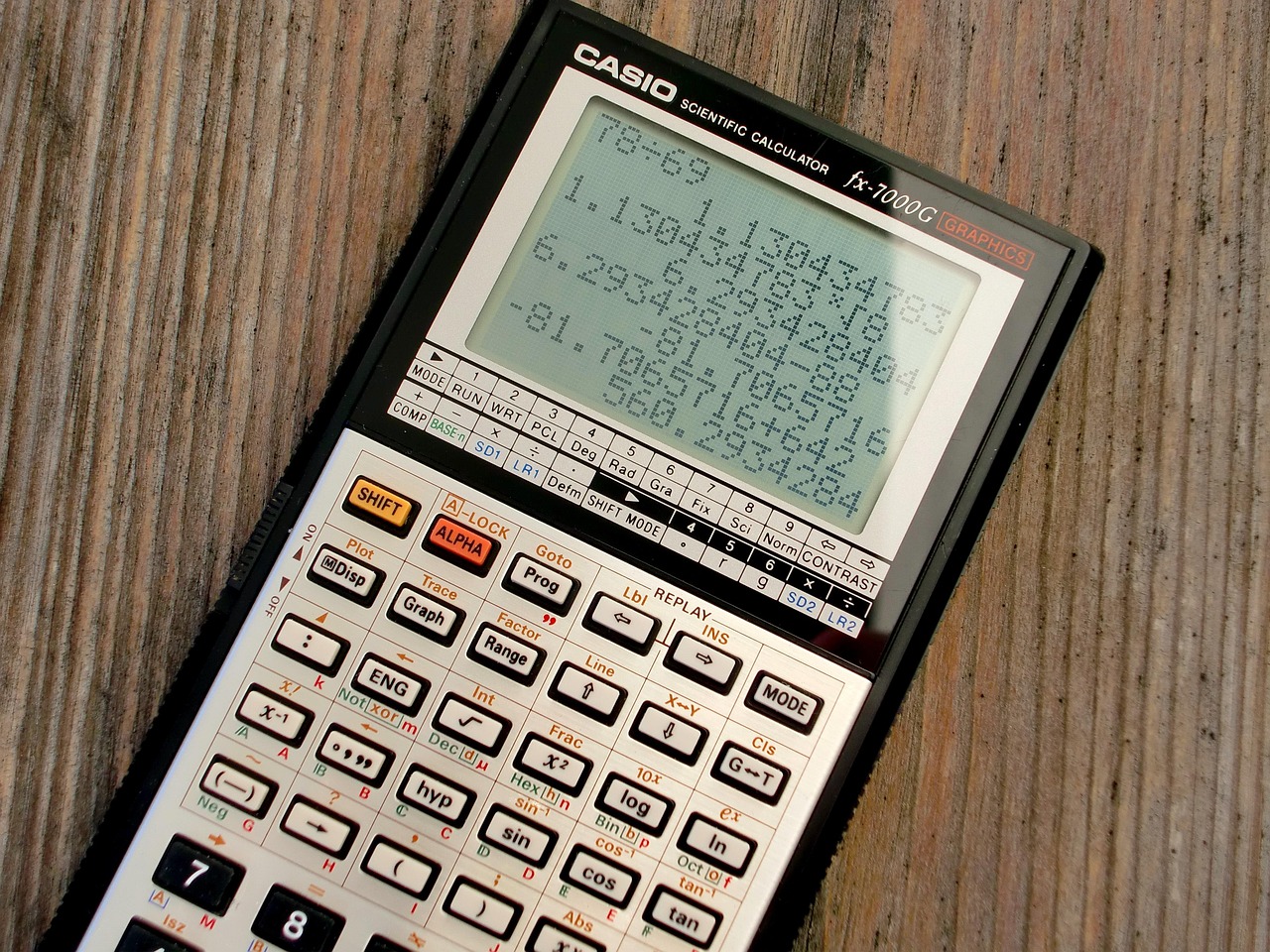
You are allowed to use a calculator for the whole Math section, and it is the only multiple-choice ACT section where a calculator is allowed, along with the separate ACT WorkKeys Applied Math test. Every problem is solvable without a calculator, so treat it as a backup tool rather than a shortcut on every question. Bring a model you already know how to operate. Test day is the wrong moment to learn a new menu system.
Allowed Calculators
The following calculator types are allowed for the Math section:
- 4-function calculators
- Scientific calculators
- Graphing calculators without a computer algebra system (CAS)
- A built-in Desmos graphing calculator for online test-takers, included in the testing platform
Prohibited Calculator Features
Calculators with a computer algebra system (CAS) are banned unless modified before test day. To bring a CAS-capable model, remove or disable:
- CAS applications
- Paper tape or printing features
- Sound, which must be turned off
- Infrared (IR) ports, which must be covered
Content Categories on the Math Test
ACT sorts every Math question into one of two reporting categories: Preparing for Higher Math and Integrating Essential Skills.
Preparing for Higher Math (80%)
This category makes up 80% of the Math section and splits into five subcategories.
| Subcategory | Share of Math Section |
|---|---|
| Number and Quantity | 10-12% |
| Algebra | 17-20% |
| Functions | 17-20% |
| Geometry | 17-20% |
| Statistics and Probability | 12-15% |
Integrating Essential Skills (20%)
This category makes up the remaining 20% of the section. It covers foundational math skills used across real-world problems, including:
- Rates
- Percentages
- Proportional relationships
- Area, perimeter, and volume
- Averages and medians
- Unit conversions
Pacing Strategy for the Math Section
With 45 questions in 50 minutes, you get about 67 seconds per question on average. Some questions take 20 seconds and others take two minutes, so treat the average as a checkpoint rather than a target for every item. Check the clock at question 15 and question 30. You should be near 17 minutes at question 15 and near 34 minutes at question 30. Falling behind those marks tells you to pick up the pace before the last stretch.
Work through questions in order and skip any question stalling you for more than a minute. Mark it, move on, and return if time remains. Reaching the end of the section matters more than perfecting one hard problem. Leave the final two minutes to fill in an answer for every question you skipped.
How Math Counts Toward Your Composite Score
Your ACT Composite score is now the average of your English, Math, and Reading scores only. Science no longer factors into the Composite score. The change took effect for online administrations in April 2025 and for all other administrations in September 2025.
Because the Composite score now averages three section scores instead of four, Math carries more weight in your overall score than before. Each section counts for one third of the Composite instead of one quarter. A weak Math score is harder to offset with strong English and Reading results. Estimate your Composite score with our ACT score calculator, free and no signup required.
Practice by Math Question Type
Each Preparing for Higher Math subcategory has a dedicated practice drill on 10exam, alongside one covering Integrating Essential Skills topics like pre-algebra. Work through them by topic to target weak areas before test day.
- Pre-Algebra
- Linear Equations and Systems
- Advanced Algebra
- Functions and Coordinate Geometry
- Plane Geometry
- Trigonometry
- Probability and Statistics
For full-length, timed Math practice, take one of our free ACT practice tests on the ACT exam page. Run the full 50 minutes without pausing so the pacing pressure matches test day. Review every missed question by category, then return to the matching drill above. No signup required.
Sources
Free practice
Put this into practice with free ACT mock tests and topic drills

Written by
Muntasir Minhaz
Runs 10Exam. Still loses to the SAT timer now and then, strictly for research.
All articles by Muntasir Minhaz →Related Articles
ACT Scores for Scholarships
There is no single ACT score for scholarships: each college and state program sets its own cutoff on the 1-36 Composite scale, so...
Aug 07, 2026
ACT Guide for International Students
International students register for the ACT through a free MyACT account, and non-US test dates cover all countries outside the Un...
Aug 07, 2026
ACT Science Conflicting Viewpoints and Evaluating Models
The ACT Science Conflicting Viewpoints passage presents two or more explanations for one phenomenon. These explanations disagree b...
Aug 07, 2026
ACT Science Research Summaries and Experimental Design
Research Summaries passages make up 45-60% of the ACT Science Test, the largest share of any passage type. Each one describes one...
Aug 07, 2026
ACT Science Data Representation: Graphs and Trends
Data Representation questions on ACT Science hand you a table, graph, or figure and ask you to read it or reason one step beyond i...
Aug 06, 2026
ACT Reading Vocabulary in Context Questions
ACT Reading vocabulary-in-context questions ask you to name what a word or phrase means inside one specific sentence, not what it...
Aug 06, 2026