Arrive at the test center at least 30 minutes before your assigned start time, since a late check-in forfeits your seat and the fee, with no refund. Home Edition check-in opens 15 minutes early and closes 30 minutes after your scheduled time. Bring one accepted photo ID, such as a passport, driver's license, or national ID card, with a name matching your registration exactly.
- Test centers ban phones, watches, notes, and calculators. The center supplies pencils and scratch paper.
- Home Edition needs a private room, a clear desk, and every screen-sharing program disabled.
- Tests from January 21, 2026 run about 90 minutes of section time, with no scheduled breaks in either format. ETS advises allowing about two hours overall.
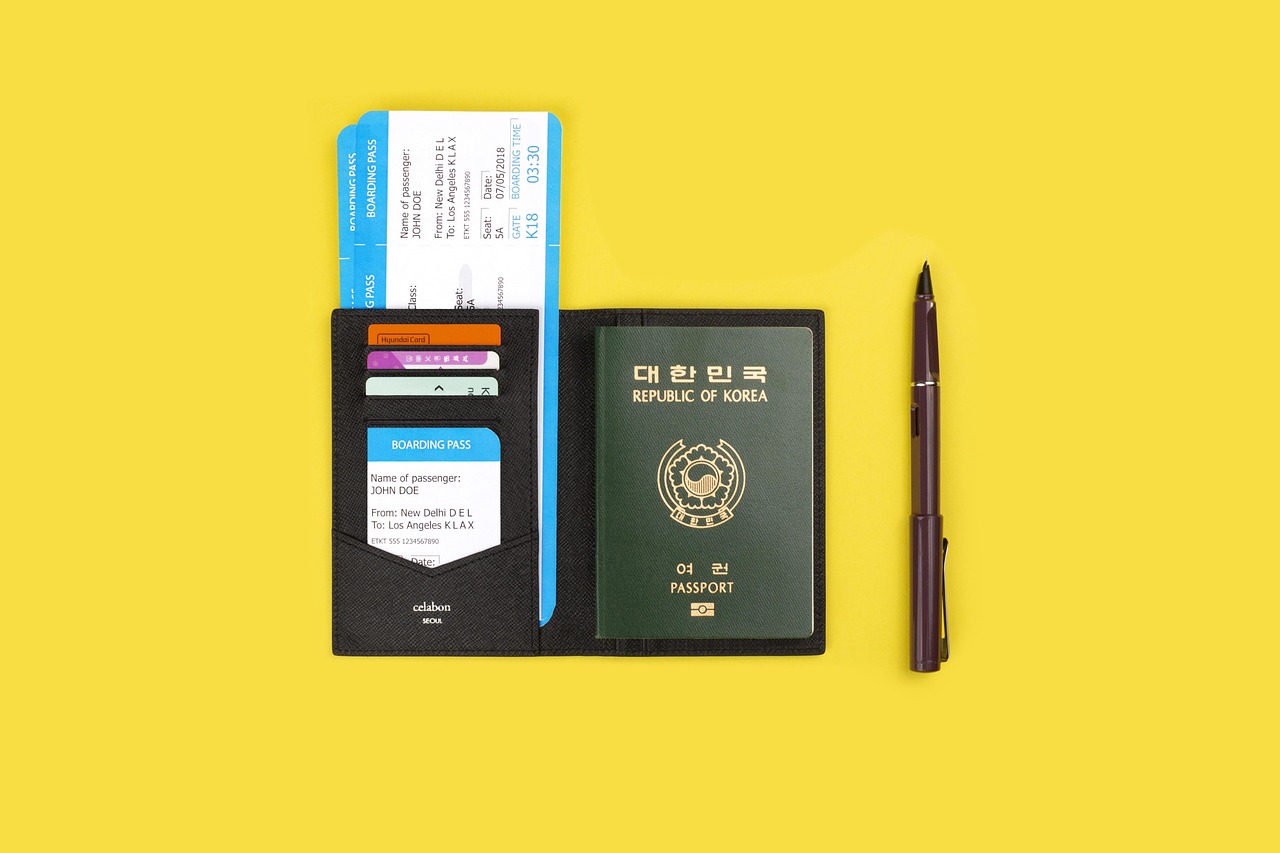
Test day for the TOEFL iBT runs on fixed rules for identification, arrival time, and what you are allowed to bring into the room. Missing the check-in window or arriving with the wrong ID forfeits your test fee, with no refund. This checklist covers what to prepare before you leave home, or sit down at your computer for Home Edition, what happens during check-in, and what to do if something goes wrong on test day.
The TOEFL iBT runs in two formats: a supervised test center and Home Edition, taken at home under a live remote proctor. Each format has its own arrival window, equipment checks, and room rules, covered separately below. See our TOEFL registration guide for the steps you complete before test day, including how your name is set on file. If you registered for accommodations, confirm your approved arrangements ahead of time in our TOEFL accommodations guide, since some items normally banned in the testing room require prior approval. If test day is still weeks away, our TOEFL study plan guide covers how to use the remaining time.
Accepted ID and Name Matching Rules
ETS accepts a limited list of primary ID documents at the test center, per the TOEFL iBT Information Bulletin. Your first and last name, and your signature where required, must match the name on your registration exactly, aside from accents. A mismatch or a missing document ends your test day at the door, and ETS refunds nothing. Check your documents against the lists below before you leave home.
Primary ID Documents
Bring one of these documents to the test center.
- Passport
- Passport Card (U.S. only, for land or sea travel among the U.S., Canada, Mexico, the Caribbean, and Bermuda)
- Driver's license
- National ID card
Supplemental ID Documents
Some test centers require a second document alongside your primary ID. Accepted supplemental documents are a government-issued ID card, a student ID card, or a confirmation-of-identity letter from your school. A confirmation letter must be typed or printed on the school's original letterhead, list your date of birth and the issue date, and carry a school official's signature and seal overlapping your photo. The letter stays valid for one year from its issue date.
IDs Never Accepted
These documents are never accepted, as primary or supplemental ID.
- International driver's license
- Mobile driver's license
- Draft classification card
- International student ID
- Credit or debit card
- Notary-prepared letter
- Birth certificate
- Social Security card
- Employee ID card
- Temporary ID, except for driver's license, Resident Card, or Employment Authorization Card renewals
- Diplomatic, consulate, or embassy ID card
- Aadhaar Card
Name Matching Rules
If your name has multiple parts, such as a hyphenated last name, enter it to match your registration exactly, aside from accents and apostrophes, along with your date of birth. If you have only a first name or only a last name, enter it in the Last or Family Name field and check the box provided for a single-part name. At check-in, staff verify your identity through photographing or video surveillance, fingerprinting or thumbprinting, signature comparison, or biometric voice or photo identification.
Arrival, Check-In and Late Policy
Check-in timing differs by format, and missing your window means an unused test fee, per the TOEFL iBT Information Bulletin.
| Format | Check-in window | If you miss it |
|---|---|---|
| Test center | Arrive at least 30 minutes before your assigned start time | You are not admitted, and the fee is not refunded |
| Home Edition | Check-in opens 15 minutes before your scheduled time and stays open for 30 minutes after it | Your test is canceled, and the fee is not refunded |
Test Center Late Policy
Arriving or checking in after your assigned start time means the test center turns you away, and ETS issues no refund. Failing to present the required ID or follow registration procedures carries the same outcome. Build in extra travel time, since the TOEFL iBT Information Bulletin sets no separate grace period beyond the 30-minute arrival rule.
If You Bring a Minor to the Test Center
Test takers age 15 or younger need an accompanying parent or authorized adult, 18 or older, at the test center. The accompanying adult completes and signs a release form on site. Both the test taker and the accompanying adult present valid ID at check-in.
Permitted and Prohibited Items at the Test Center
Staff at the test center inspect everything you bring or wear into the room, so pack light and check this list before you leave home, per the TOEFL iBT Information Bulletin. Several rules below are written in terms of breaks, and the redesigned format schedules none, so they apply only to an unscheduled break or a break approved as an accommodation. Treat break-conditioned wording as an exception, not as part of your plan for the session.
What You Are Allowed to Bring
The testing room allows only a short list of personal items.
- Your ID documents
- Food and beverages, accessible during a break only
- Medication, accessible during a break only, aside from approved health accommodations
Prohibited Items and Aids
Everything outside the allowed list stays outside the testing room, stored per staff instructions.
- Phones, tablets, watches, and headphones
- Pens, scan pens, and calculators
- Books, pamphlets, notes, and prep materials
- Rulers, highlighters, and dictionaries
- Translators
- Any electronic, scanning, listening, recording, photographic, or wearable device
- Your own scratch paper
Security and Inspection Procedures
Staff visually inspect your clothing, footwear, and ID at check-in, and again on any return from a break. This inspection sometimes requires removing eyeglasses, emptying your pockets, or raising pant legs and sleeves. Face masks, large jewelry, hair accessories, hats, scarves, and jackets come off before you enter the room, though wedding and engagement rings stay on. You are allowed to request a same-gender or private inspection.
Scratch Paper Rules
The test center provides pencils and scratch paper, and bringing your own is not permitted. A new page arrives only after you use and return every page already issued. Scratch paper stays unused before the test, between sections, and during any break, and you return every page at the end of your session.
Home Edition Room and Equipment Checks
Home Edition swaps the test center's physical checks for a room scan and live proctor verification, per the TOEFL iBT Information Bulletin and the At Home Requirements page. The proctor verifies your identity, your room, and your equipment before the test starts. Test the same room, computer, and internet connection you plan to use on test day, at least a day ahead. Read our TOEFL Home Edition guide for full setup instructions.
Room and Environment Requirements
Home Edition replaces on-site security with rules about your room, your seat, and your own appearance, per the At Home Requirements page. Check every item below in the room you plan to use, before your check-in window opens.
- Test alone in a private room with every door closed, and nobody else enters during the session
- Cover transparent walls, doors, and large open windows
- Sit at a desk or table in a standard chair, since beds and couches are not permitted
- Keep your ears and face visible for the whole session, and face masks are prohibited
- No food or drink during the test, unlike the test center
- Give the camera a 360-degree view of the room, including your desk and the space below it
A human proctor monitors and records your entire session, and takes your photo. Keep the room private until the test ends, since anyone entering breaks the rule requiring you to test alone. Set the camera so its view holds for the whole session without adjustment.
Desk and Note-Taking Materials
Clear your desk of every item outside the approved list. Note-taking materials are limited to one of two options: a small desktop whiteboard with an erasable marker, or one blank sheet of paper inside a transparent sheet protector with an erasable marker. If you use the paper option, it stays inside the protector for the entire test.
Equipment You Need
Home Edition runs on a desktop or laptop computer, running Windows 11 or newer, or Mac OS X 10.13 or newer. You need a single monitor, an internal or external speaker and microphone (not a headset), and a webcam or built-in camera. An optional smartphone or tablet, running iOS 12 or newer or Android 8 or newer, serves as a second camera for room monitoring.
Screen-Sharing Software
Disable every screen-sharing or remote-access program before the test, including Zoom, Skype, TeamViewer, Microsoft Teams, and Apple Remote Desktop. These programs stay disabled through the entire test, including their auto-launch settings. Check the startup settings on your computer, since several of these programs open themselves when the machine boots. Restart the computer once you finish, then confirm nothing reopens.
Check-In Flow, Step by Step
Select Start Test from your confirmation email to launch the TOEFL Test App. The check-in flow follows a set order, per ETS's Home Test Day guide. Work through it with your ID and note-taking materials already on the desk.
- Enter a virtual waiting room
- Connect your second camera, if applicable
- Complete identity verification with a live proctor
- Complete the room scan
- Pass a final equipment check
- Begin the test
Have a cellphone or hand-held mirror ready for identity verification, along with your second-camera device if your appointment uses one. Keep your approved note-taking materials on the desk for the same step. The proctor works through each item in order, so a missing piece stalls the whole check-in.
Conduct During the Test
Stay in view of the proctor for the entire test. Avoid talking out loud or looking away from the screen. Unscheduled breaks are not allowed.
A dropped connection reconnects you to the proctor automatically once your connection returns. A camera failure pauses the exam while the proctor sends reconnection instructions. The test timer starts only after the equipment check finishes and the test itself begins, per ETS's Home Test Day guide.
Break Rules During the Test
Tests taken on or after January 21, 2026 follow the redesigned TOEFL iBT format, and this format includes no scheduled breaks, in the test center or Home Edition, per the TOEFL iBT Information Bulletin. Section time totals about 90 minutes across the four sections. ETS advises allowing approximately two hours to complete the test, since the 90 minutes covers section time alone and leaves out check-in and directions, per its test content and structure page. Plan your travel and the rest of your day around the two-hour figure, not the 90-minute one. Take a full-length TOEFL practice test to build your pacing for test day.
| Section | Time | Items |
|---|---|---|
| Reading | About 30 minutes | About 50 |
| Listening | About 29 minutes | About 47 |
| Speaking | About 8 minutes | About 11 |
| Writing | About 23 minutes | About 12 |
The Bulletin still writes several test center rules in terms of breaks: food, beverages, and medication reachable during a break, a fresh inspection on any return from a break, and scratch paper left unused during a break. Those rules cover an unscheduled break or a break approved as an accommodation, since the redesigned format schedules none. Proctors monitor unscheduled or excessive breaks closely, and taking one risks dismissal from the test or cancellation of your score. Use the restroom before check-in, and treat the session as one continuous block.
What Happens If Test Day Is Disrupted
Disruptions fall into two categories: a cancellation ETS makes on its side, and an irregularity affecting your individual session, per the TOEFL iBT Information Bulletin. The remedy differs by category, and ETS decides each one. Keep the email address and phone number on your account current, since ETS uses them to reach you.
ETS Cancels Your Session
Weather, a natural disaster, or another hazardous condition sometimes forces ETS to cancel a session. ETS contacts you by email or phone, then transfers your fee to a new appointment or refunds it on request. A session ETS reschedules before you test carries no rescheduling fee. If you travel to a center and find your session canceled on site, you get a free reschedule or a full refund.
Testing Irregularities During Your Session
Equipment problems, administration errors, or an emergency during your own session count as testing irregularities. ETS sometimes declines to score your test or cancels your scores because of one. When appropriate, ETS gives you the opportunity to retake the test at no charge, as soon as reasonably possible.
Violation Consequences
A security violation during the test or during a break sometimes leads to dismissal, score cancellation, or a report to the appropriate authorities. Failing to follow instructions from the administrator or proctor means you are not permitted to test, and ETS issues no refund. Ask the administrator or proctor before you act whenever a rule is unclear, since the consequences land after the fact.
Reporting or Canceling Scores
At the end of the test, you choose to report your scores or cancel them. Canceling requires canceling every section, and it forfeits your fee. A canceled score is eligible for reinstatement for a fee, within 60 days of your test date, and reinstated scores post about three weeks after ETS receives your request and payment.
Sources
Free practice
Put this into practice with free TOEFL mock tests and topic drills

Written by
Muntasir Minhaz
Runs 10Exam. Still loses to the SAT timer now and then, strictly for research.
All articles by Muntasir Minhaz →Related Articles
TOEFL Score Requirements by University Selectivity
TOEFL score minimums rise with university selectivity. Highly selective universities often require 90 to 100 or higher on the old...
Aug 01, 2026
TOEFL Insert Text and Prose Summary Questions
Insert Text and Prose Summary are legacy TOEFL Reading formats, retired in the 2026 redesign. ETS's current Reading section page n...
Jul 31, 2026
TOEFL Reference and Sentence Simplification
TOEFL Reading does not name Reference or Sentence Simplification as official question types anymore. ETS lists three current Readi...
Jul 30, 2026
TOEFL Inference and Rhetorical Purpose Questions
Inference questions ask what a passage's stated facts also make true, without the passage saying so directly. Rhetorical Purpose q...
Jul 29, 2026
TOEFL Factual and Negative Factual Information
Factual Information questions ask you to find the one answer choice a passage states directly. Negative Factual Information questi...
Jul 28, 2026
TOEFL Complete the Words and Read in Daily Life
Complete the Words and Read in Daily Life are two new TOEFL Reading task types added in the January 2026 redesign. Complete the Wo...
Jul 27, 2026