Bring the same ID document you booked with, passport or national ID: wrong or missing ID means no test. IELTS is no longer sold on paper from mid-2026, so you sit it on computer, with handwritten Writing in selected countries. Phones, wallets, watches, bags and food stay outside the room.
- Academic timing: 2 hours 45 minutes total, Listening about 30, Reading 60, Writing 60, Speaking 11 to 14 minutes.
- Listening, Reading and Writing run in one 2 hour 40 minute session with no breaks between sections.
- Staff photograph you for your Test Report Form, and some centres add a finger scan.
- Speaking runs on test day or about a week either side.
- Arrive late, and staff might not admit you.
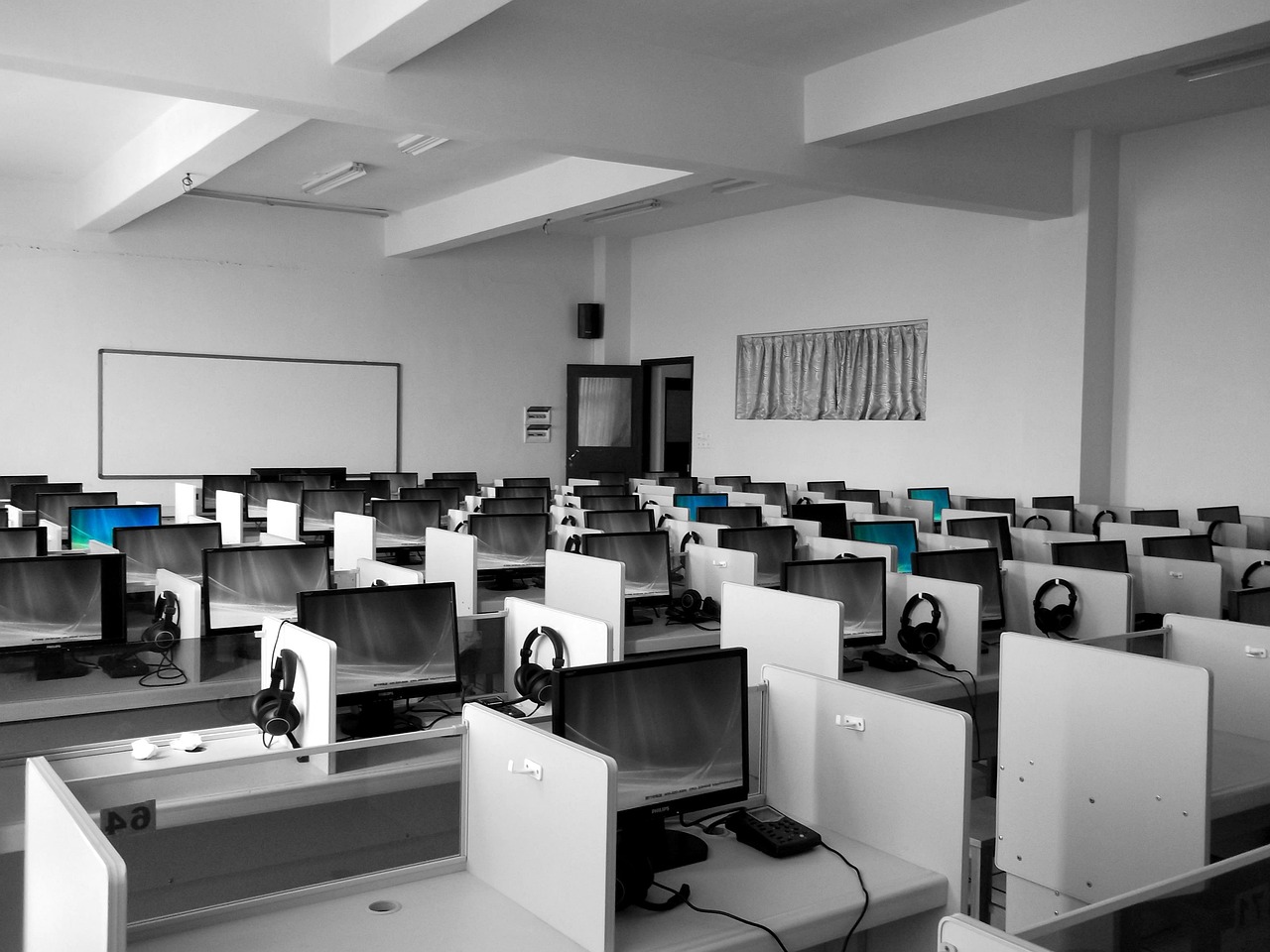
IELTS test day now runs on computer. IELTS is no longer offered as a paper-based test from mid-2026, and exact timelines vary by market. In selected countries you are able to book IELTS on computer (Writing on Paper), where Listening and Reading stay on screen and you handwrite your Writing answers. The rest of test day, ID checks, banned items and invigilation, works the same way in every mode.
This guide covers what to bring, what stays outside the test room, how check-in and identity checks work, how the day is timed, the rules inside the room, and what happens if you arrive late. Read it with our IELTS registration guide and our computer versus paper IELTS comparison before you book your date. Every rule below is linked to an official IELTS, British Council or IDP page, since local centres differ on the details.
Test Day Formats After the Paper Phase-Out
Your test day depends on the delivery mode you book. The table below sets out the modes on sale now, per the IELTS update on test delivery and the Writing on Paper format page.
| Delivery mode | How you answer | Where you sit it |
|---|---|---|
| IELTS on computer | Listening, Reading and Writing answers typed on screen | Test centre |
| IELTS on computer (Writing on Paper) | Listening and Reading on screen, Writing tasks on screen with handwritten answers on an IELTS Writing Answer Sheet | Test centre, selected countries from mid-2026 |
| IELTS Online | All answers typed on screen under remote proctoring | Home or another private location, Academic only |
| IELTS on paper | Withdrawn from mid-2026 | Timelines vary by market |
Writing on Paper gives you an IELTS Writing Answer Sheet and a pen, and the task types, scoring and time allocation match the typed Writing component, per IELTS. It is not offered for IELTS for UKVI tests. A One Skill Retake has to be taken in the same delivery mode as your original test, per the IELTS delivery update. Ask your test centre which modes it runs before you pick a date.
What to Bring on Test Day
Identification Documents
Bring the same identification document you used when you booked your test, per IELTS test day advice. Bring the wrong ID or forget it, and you are not able to take your test. Show the same document to the Speaking examiner before your Speaking test starts. For accepted ID types by country, see our IELTS registration guide.
Your Test Day Photo
Test centre staff photograph you on test day as a security measure, and the photo appears on your Test Report Form, per British Council IELTS test day information. Your face has to be visible for it, so you are asked to temporarily remove any covering from your face, per IDP IELTS identity verification requirements. Every organisation you send your results to sees this photo, so expect a plain, front-facing shot. Contact your test centre before test day if you wear a face covering, so staff arrange the check with you in advance.
Stationery and Test Materials
Test centres supply what you write with, so leave your own pens and pencils at home. Here is what you are given:
- IELTS on computer: the centre provides paper and pencils for notes, per IDP IELTS test day guidance.
- Writing on Paper: the centre gives you an IELTS Writing Answer Sheet and a pen, per IELTS.
- British Council centres: personal stationery, including pencils, is not permitted in the test room, and you write with a pen supplied by the centre, per British Council IELTS test day information.
See our computer versus paper IELTS guide to compare typed and handwritten Writing before you book. Check your booking confirmation for the mode you picked, since the materials on your desk differ by mode. Turn up with your ID and nothing to write with, and let the centre hand you the rest.
Prohibited Items
Personal Belongings Stay Outside the Room
Every personal item is switched off and left outside the test room, per IELTS test day advice. Banned items include:
- Mobile phones and other electronic devices
- Keys and wallets
- Watches, smartwatches and fitness trackers
- Bags
- Food
British Council centres allow only your ID document and a clear bottle of water into the test room, per British Council IELTS test day information. Keep a phone or other electronic device on you, and you are disqualified, per IDP IELTS test day guidance. Empty your pockets into the storage area at check-in, then check them again before you sit down.
Companions and Family Members
Test takers and test staff are the only people permitted to enter the test venue during testing, per IDP IELTS test day guidance. Arrange childcare and transport in advance, since no one waits inside the centre with you. Ask anyone dropping you off to return at your finish time.
Check-In, Identity Verification and Room Scans
Arrival and Check-In
British Council test centres email your start time at least three days before the test, per British Council IELTS test day information. Set an alarm and leave enough time to get to the test centre without rushing, per IELTS test day advice. Check-in runs in a fixed order:
- Show the same ID document you booked with.
- Store your phone, bag, watch and all other belongings outside the test room.
- Have your photo taken for your Test Report Form.
- Give a finger scan where your centre uses finger scanning.
- Take your seat and stop talking to other test takers, per IDP IELTS test day guidance.
Confirm the venue address the day before, and allow extra time for local transport. Bring your booking confirmation email with your start time on it, printed or on paper, since your phone goes into storage at the door. Expect a queue at the desk, because every test taker moves through the same ID, storage and photo steps.
Photo and Finger Scan
Finger scanning depends on your test centre and on local rules. Some British Council centres take a finger scan alongside the photo, per British Council IELTS test day information, and IDP excludes test takers under 18 from finger scanning, per IDP IELTS identity verification requirements. Where a centre runs it, staff take the photo and finger scan at the entrance to the test room, then re-match the scan every time you leave and return after a comfort break, per IELTS test day finger scanning and photography. The scan converts to a number sequence rather than a stored fingerprint image.
Refuse identity verification, and you are not allowed to test, with no transfer, cancellation or refund, per IELTS test day finger scanning and photography. Tell an invigilator before a scan is taken if you do not consent, and staff verify your identity manually instead, per IDP IELTS identity verification requirements. Ask your centre which checks it runs when you book, so nothing surprises you at the door.
Room Scan for IELTS Online
IELTS Online test takers need a phone or tablet with a camera for a room scan before the test starts, and the device is switched off and put away once the scan finishes, per IELTS test day advice. Set up at a desk in a quiet, private, well-lit space with a reliable internet connection, per IELTS Online guidance. Download the Inspera Exam Portal and run the pre-test system checks at least one day before your test, per the same page. Clear your desk of notes, books and spare devices before the scan starts, and keep your passport within reach for the ID check.
Human and artificial intelligence proctoring monitors you for the whole test, per IELTS Online guidance. A proctor appears on screen only if something seems wrong, or if you raise your hand to ask a question or take a bathroom break. Treat the room scan as part of your test time budget and log in early enough to finish it without pressure.
Format of the Day and Speaking Scheduling
Academic Test Timing
The table below shows Academic section timing, per IELTS Academic test format and sections.
| Section | Time |
|---|---|
| Listening | About 30 minutes |
| Reading | 60 minutes, including transfer time |
| Writing | 60 minutes |
| Speaking | 11 to 14 minutes |
| Total | 2 hours 45 minutes |
See our IELTS Listening section guide for a breakdown of the Listening test. Reading carries its transfer time inside the 60 minutes, so no extra minutes follow it. Speaking runs with a trained examiner in its own slot, on test day or on a separate day.
Computer-Delivered Test Session
Listening, Reading and Writing run back to back in one session lasting 2 hours 40 minutes, with no breaks between sections, per IELTS test day advice. Each section has a fixed duration, and pausing to return later is not allowed, per IELTS Online guidance. A stopwatch sits in the upper middle of the screen and flashes in the last 10 minutes and again in the last 5 minutes before the Reading and Writing tests end, per IDP IELTS on computer guidance. Note your own checkpoints against it at the start of each section.
The Writing screen counts your words in the lower-left corner, so you track Task 1 and Task 2 length as you type, per IDP IELTS on computer guidance. A review button marks any question for a second look, and the question number changes from a square to a circle. Listening gives you 2 minutes to review your answers at the end, with no extra transfer time, and a volume control bar sits in the upper right corner. Rehearse with these on-screen controls first, so the interface costs you no marks.
When You Take Speaking
Your Speaking test runs on the same day as Listening, Reading and Writing, or on a separate day up to about a week before or after, depending on your test centre, per British Council IELTS test day advice. Your centre tells you in advance which arrangement applies to you. Speaking takes 11 to 14 minutes with a trained examiner, and you show the same ID document again before it starts. Plan travel and time off for a second visit if your centre splits the two parts.
Rules During the Test
Invigilation Rules in the Room
Once check-in ends, the room runs on invigilator instructions. Follow these rules from the moment you sit down:
- Raise your hand to get an invigilator's attention for a question or a bathroom trip, per IDP IELTS test day guidance and British Council IELTS test day information.
- Stop talking to other test takers from check-in onwards, per IDP IELTS test day guidance.
- Do not disturb other test takers, per British Council IELTS test day information.
- Stay in your seat until the invigilator gives you permission to leave the room, per the same British Council page.
- Tell the invigilator straightaway about anything affecting your performance, per the same British Council page.
Malpractice ends your test. Keep a mobile phone or other electronic device on you, and you are disqualified, per IDP IELTS test day guidance. Refuse identity verification, and you lose the test with no transfer, cancellation or refund, per IELTS test day finger scanning and photography. The IELTS partners work with authorities worldwide to detect, prevent and take legal action against cheating and fraud in line with local laws, per IELTS test security.
Breaks and Re-Entry Checks
A centre-based computer session gives you no break between Listening, Reading and Writing, per IELTS test day advice. Raise your hand for the invigilator if you need the bathroom during the session, per British Council IELTS test day information. Where your centre uses finger scanning, staff re-match your scan each time you leave and return after a comfort break, per IELTS test day finger scanning and photography. Your belongings stay outside the room for the whole session, so a break gives you no access to a phone or notes.
IELTS Online works differently: you are allowed one 5-minute bathroom break during Listening, Reading and Writing, and it is taken between tests, for example between the end of Listening and the start of Reading, per IELTS Online guidance. Official pages publish no break length for centre sittings, so ask your test centre what it allows. Use the toilet before check-in, and drink from your clear water bottle at your desk instead of leaving the room.
What Happens If You Are Late
Test Centre Sittings
Arrive late, and staff might not admit you to the test, per British Council IELTS test day advice. Official pages set no published cutoff time and no refund or transfer rule for late arrival, so contact your test centre for its local policy. Treat your emailed start time as the deadline for being seated, not for reaching the door. Aim to arrive well before check-in, since ID checks, storage and photos take time for a full room.
IELTS Online
Give yourself extra time to log in to your test, since arriving late means you might not be allowed to take it, per IELTS test day advice. Run the pre-test system checks the day before, then log in early on test day. A slow connection or a failed hardware check eats into your start window, and the room scan still has to happen before the first section.
Test day rewards rehearsal. Our free IELTS practice tests and section drills at 10Exam IELTS practice run under real section timings with no signup required, so the on-screen clock feels familiar before you sit the test. If you need extra time or other support arrangements, plan ahead with our IELTS accommodations guide.
Sources
- IELTS test day advice: what to expect
- Updates to IELTS test delivery
- IELTS on computer (Writing on Paper)
- IELTS Academic test format and sections
- IELTS Online: take IELTS Academic online
- IELTS test security and result integrity
- British Council IELTS test day advice
- British Council IELTS test day information
- IDP IELTS test day guidance
- What to bring to an IELTS test | IDP IELTS
- IDP IELTS identity verification requirements
- How IELTS on computer works | IDP IELTS
- IELTS test day finger scanning and photography
Free practice
Put this into practice with free IELTS mock tests and topic drills

Written by
Muntasir Minhaz
Runs 10Exam. Still loses to the SAT timer now and then, strictly for research.
All articles by Muntasir Minhaz →Related Articles
IELTS Academic vs General Training: Which to Take
IELTS Academic and General Training share the same Listening and Speaking tests. Reading and Writing Task 1 differ. Take Academic...
Aug 03, 2026
IELTS Requirements for Australia Visas and Migration
Home Affairs recognizes five English levels for Australian visas: Functional, Vocational, Competent, Proficient and Superior. Skil...
Aug 02, 2026
IELTS for Canada Immigration: CLB Score Mapping
Canada converts your IELTS General Training band scores into Canadian Language Benchmark (CLB) levels, and CLB is what Express Ent...
Aug 02, 2026
IELTS Band Requirements for UK Student Visas
The UK Student visa asks for CEFR level B2 English at degree level and CEFR B1 below degree level. B2 is met with IELTS for UKVI a...
Aug 01, 2026
IELTS General Training Reading: Text Types Explained
IELTS General Training Reading Sections 1 and 2 use short, practical texts instead of the long passages found later in the test. S...
Jul 31, 2026
IELTS Reading Multiple Choice Questions Explained
IELTS Reading Multiple Choice comes in two forms. The single-answer version gives four options, A to D, and one option is correct....
Jul 30, 2026